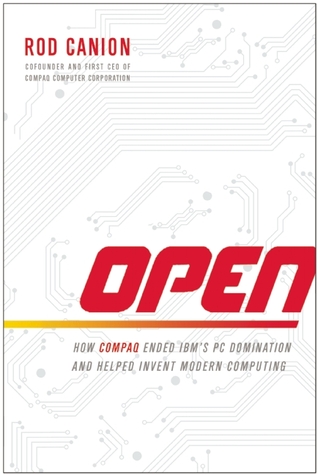
Summary:
- There was a time when there was no industry standard for PC. Every software and hardware had to be created in different versions, one for each PC manufacturer (like iOS and android today).
- IBM was so big that all software and hardware makers were targeting IBM computers first.
- Backwards compatibility was not usual and it was common for people to have to buy new versions of software and hardware whenever they updated their machine.
- Compaq’s idea: make a machine that could run the IBM software/hardware. « IBM compatibe » or « clone ».
- Promised 100% compatibilty. 99% was not reliable enough.
- Made a machine that was even more backwards compatible than IBM themselves. Keeping backwards compatibility was key.
- Started with portable computers so that they didn’t eat into IBM or Apple’s market.
- Then IBM started the war by making a portable. Portable was not a success and Compaq’s product succeeded. Then Compaq fired back by releasing a fully backwards compatible desktop.
- Compaq then took the innovation lead from IBM by releasing the first 386.
- IBM fired back by announcing the PS/2, a completely new architecture that they protected against cloning. 0 backwards compatibilty, they were relying on their brand to push it through.
- Compaq organized the rest of the industry (« gang of 9 ») to push for a non-IBM standard that supported backwards compatibility.
- Eventually that new standard won and made the industry what it is today.
Lessons:
- Compaq selected their market very thoughtfully: started with portable computers so that they didn’t directly enter competition with Apple/IBM. Then only moved to desktop/laptops when the time was right: sometimes later than the competition but always guaranteeing 100% compatibility.
- Compaq had a reputation for quality and reliability, which was very different from the Compaq of the 90s that I grew up with, where it already was the low-end market brand.
- They changed the industry but that story is nowhere as commonly told as the Apple or Microsoft one.
- One of the « secret sauces » of Compaq was « the Process », a way to make difficult decisions. In short: a leader is in charge of guiding a team of experts through a consensus. See p. 93.